Customers
Start every customer conversation with the right context
Keep customer details, addresses, orders and notes together so every conversation starts with context.
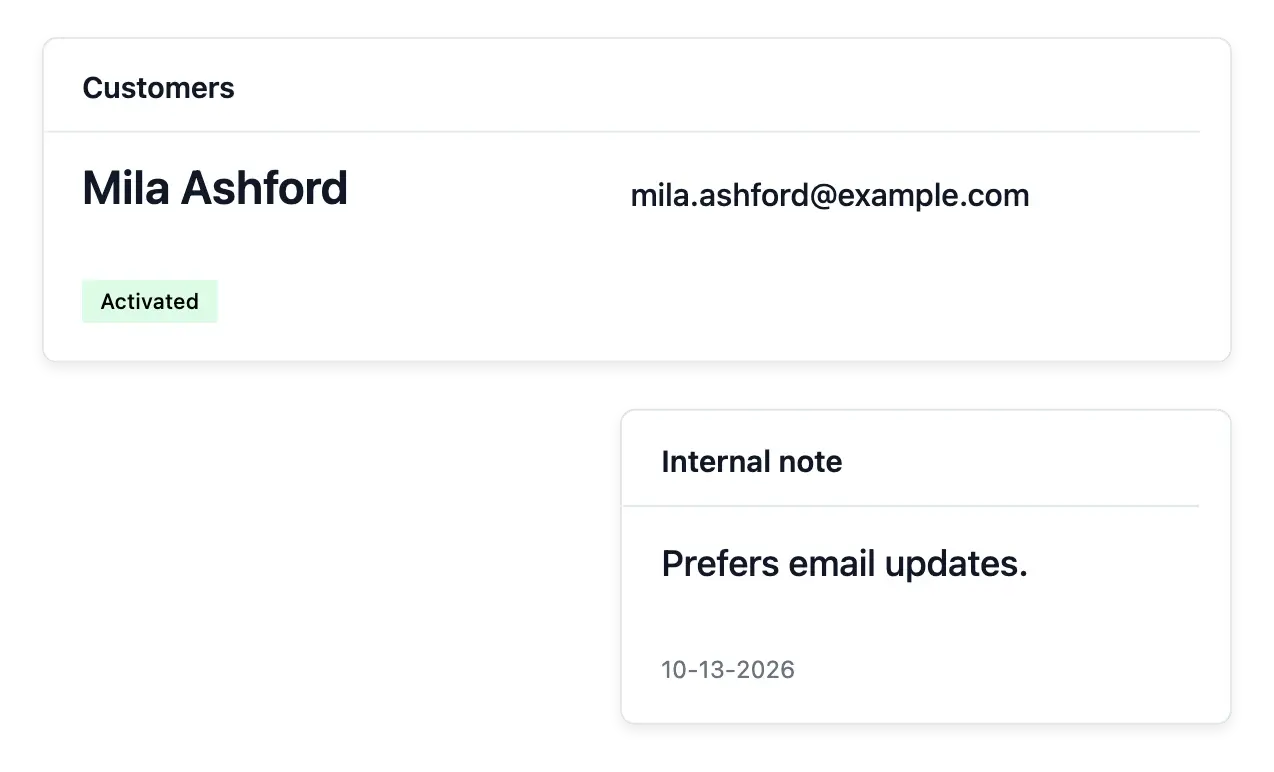
Keep the person behind every purchase in view
- A clear customer book
Find individuals and companies by name or contact details.
- Everything on one record
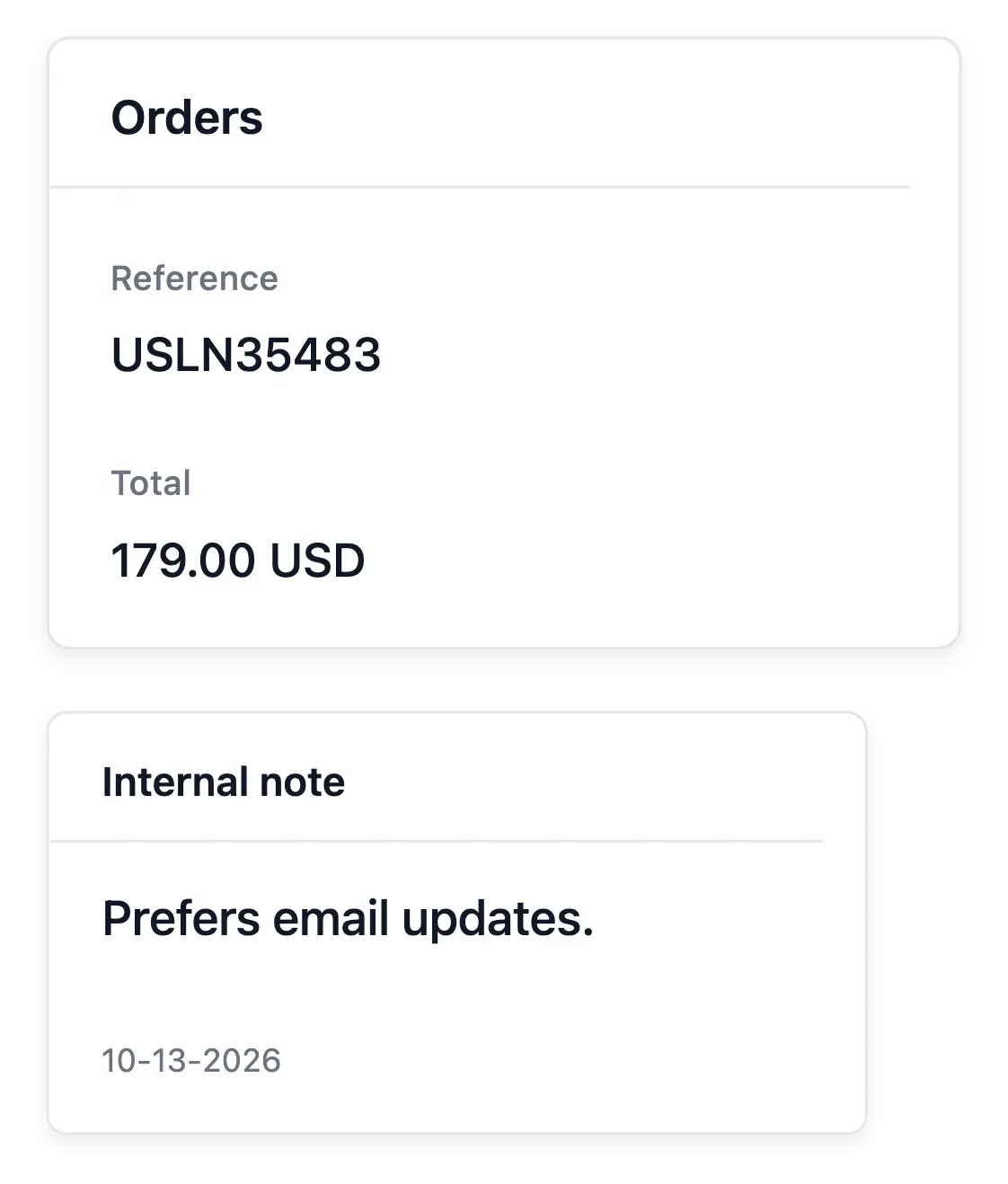
Read addresses, orders and your notes from the customer’s own record.
- Keep information current
Correct contact details and addresses without losing the link to previous sales.
Build a customer book your team can use
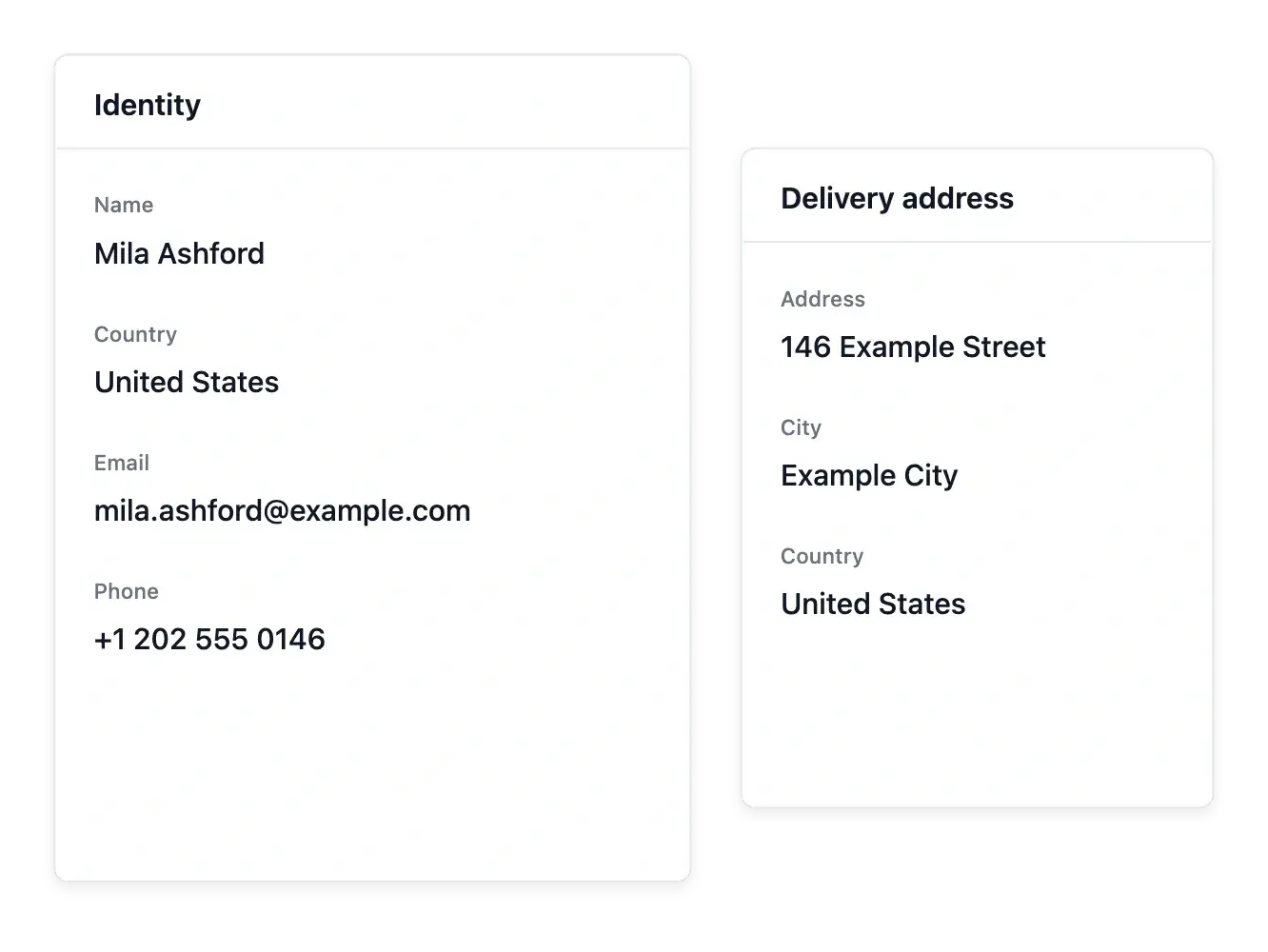
Find individuals and companies by their identity or contact information. Each record gives your team a stable place to consult a buyer, instead of treating every new order as an unrelated person.
Maintain billing and delivery addresses, contact details and internal notes with the customer's history. Correct current information while retaining access to previous orders and the context those purchases provide.
Keep a usable picture of the customer
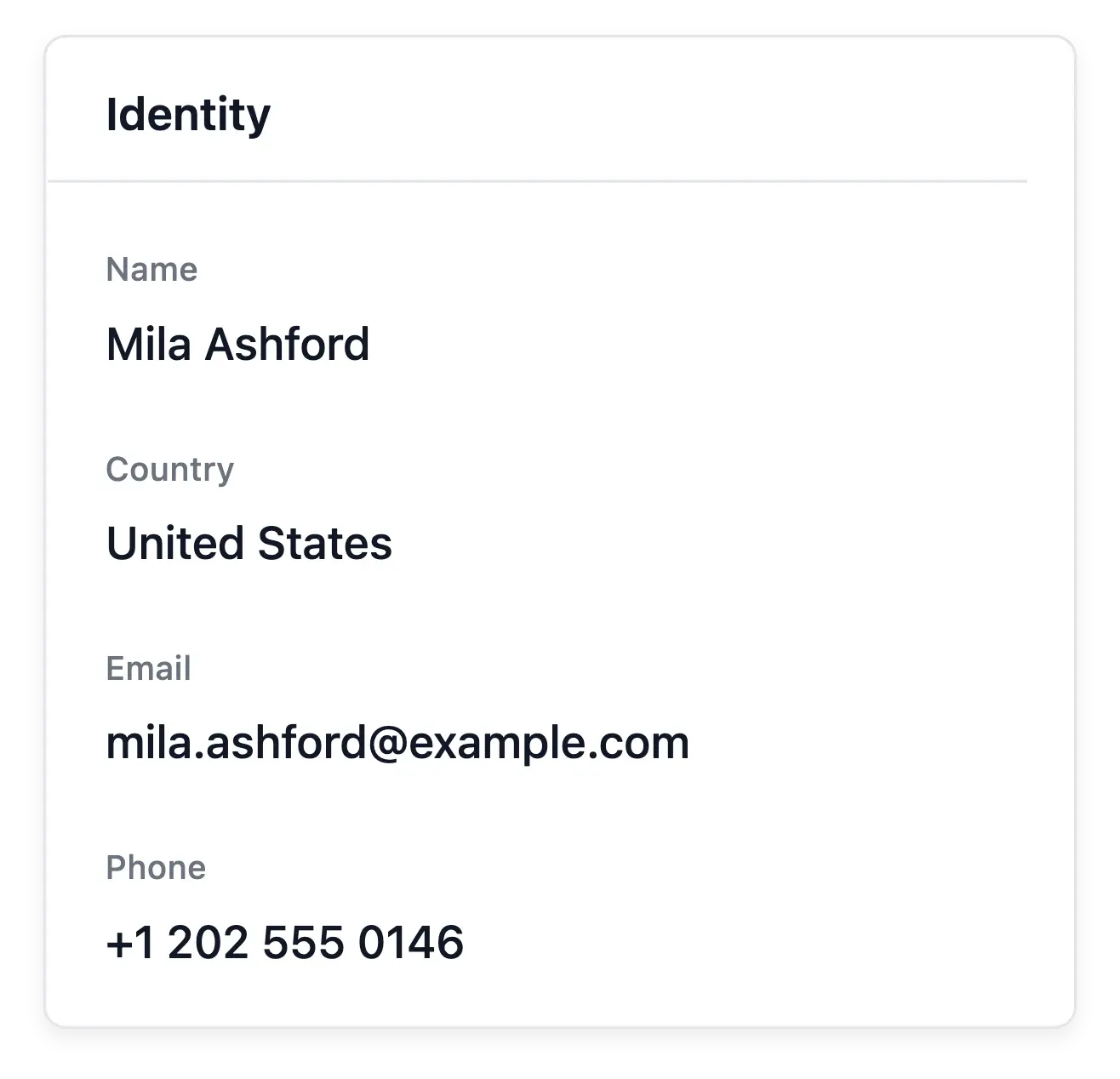
An operational identity. Read the customer’s recorded contact information before acting. Use the customer directory to find the right person rather than relying on a first name.
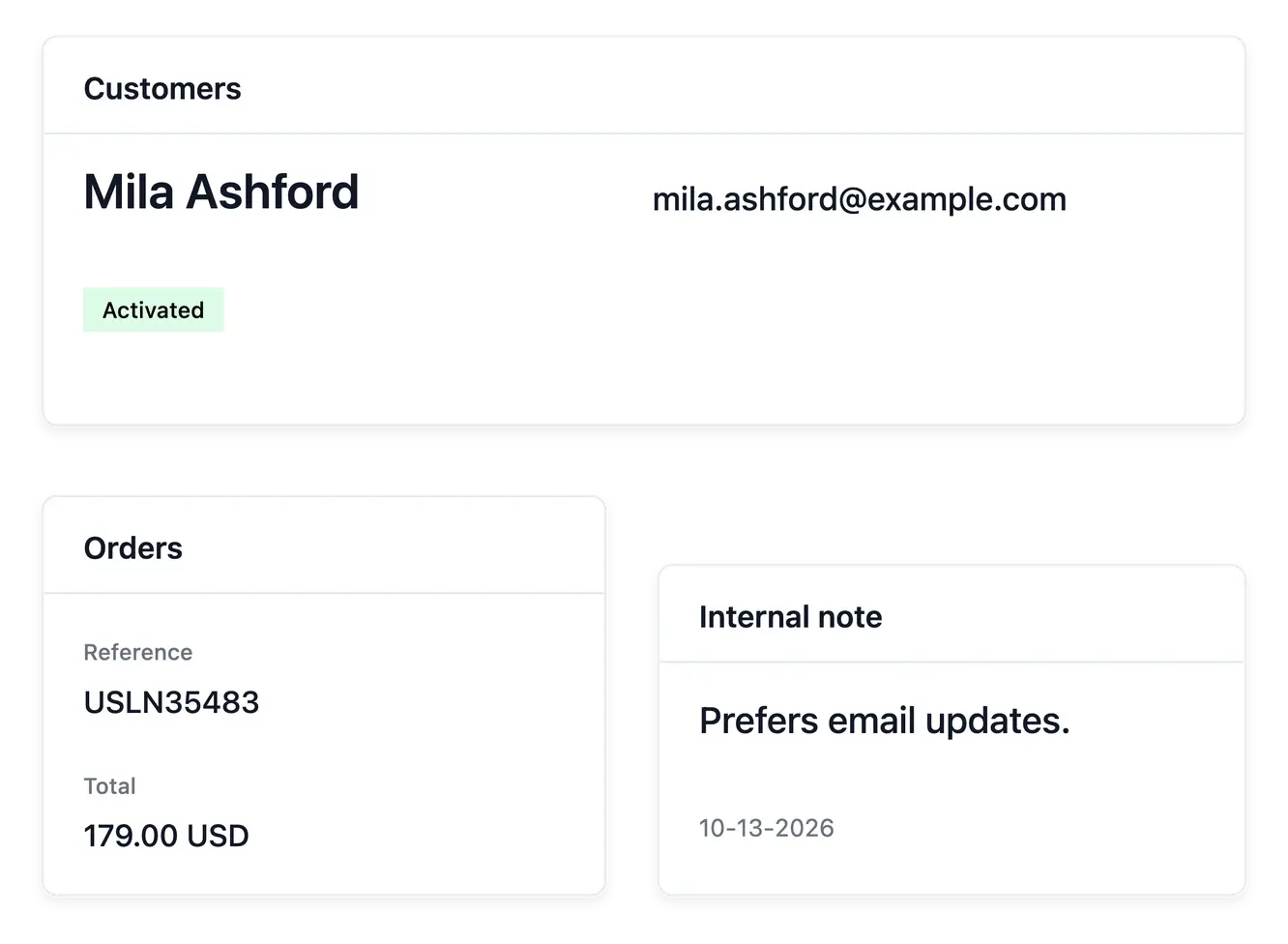
Purchases in context. Consult the customer record alongside recorded orders and related history. Those records explain the actual relationship with the shop.
Separate related services. Verification, membership and retained credit answer different questions. Inspect the relevant view instead of treating one result as the whole customer profile.
Connect customer knowledge to daily operations
Open orders from the customer record when a buyer asks about a purchase. The same context helps you choose the right recipient when preparing an individual email or SMS from the shop's messaging tools.
Use notes to keep useful context for your team. The customer book organizes recorded relationships; it is not a campaign segmentation engine and does not turn having an email address into newsletter consent.
Handle a customer question with purchase context
Find the person. Search the directory and confirm the contact details on the record. Distinguish similar names before discussing an order.
Read the purchase history. Open the relevant purchase and its records. Keep the question connected to the item or payment concerned.
Use the right follow-up. Choose support, returns, verification or messaging according to the case. Each tool maintains its own outcome and history.
Build stronger relationships from better customer context
Keep purchases, addresses and team notes connected as your customer base grows.
Questions about Customers
Yes. The customer book supports individuals and companies.
Yes. Customer search helps locate a person using the supported name or contact fields.
Yes. Both address subjects are available on the customer record.
Yes. The order view is linked from the customer record.
They are internal customer-record notes for your team, rather than storefront descriptions.
No. Marketing subscription and its recorded consent are managed in Newsletter.