Customer accounts
Give buyers their purchase context in one place
Give buyers an account where they can follow orders and open requests linked to their purchases.
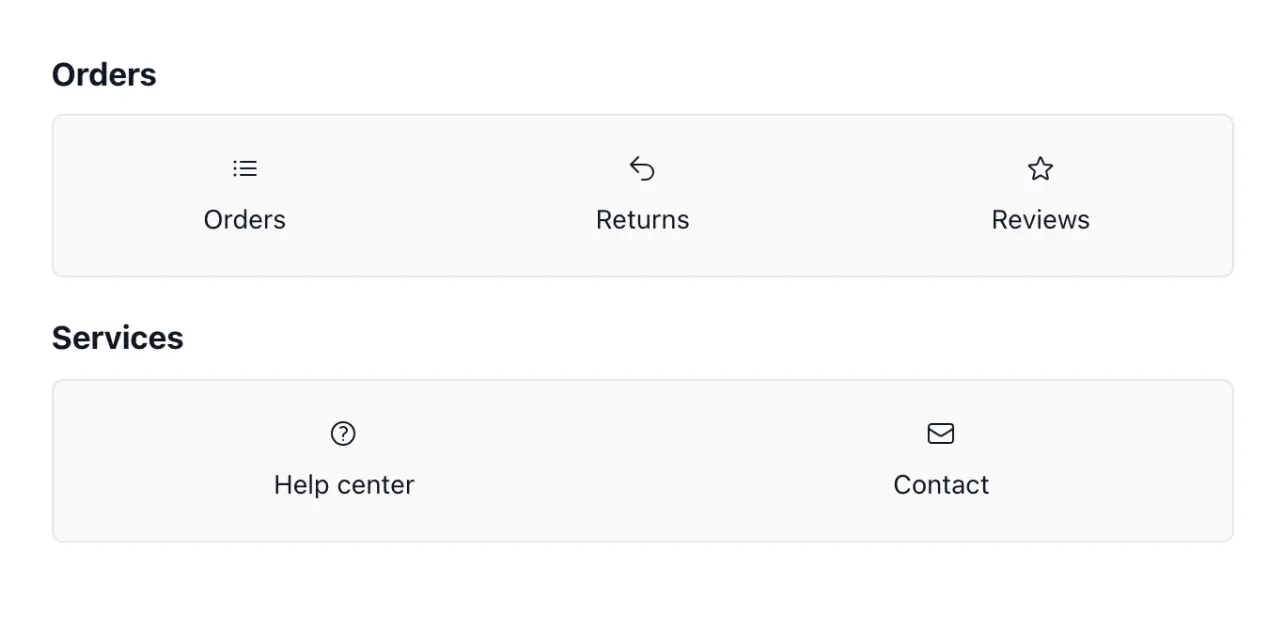
Give buyers a place to follow their purchases
- Buyer identity
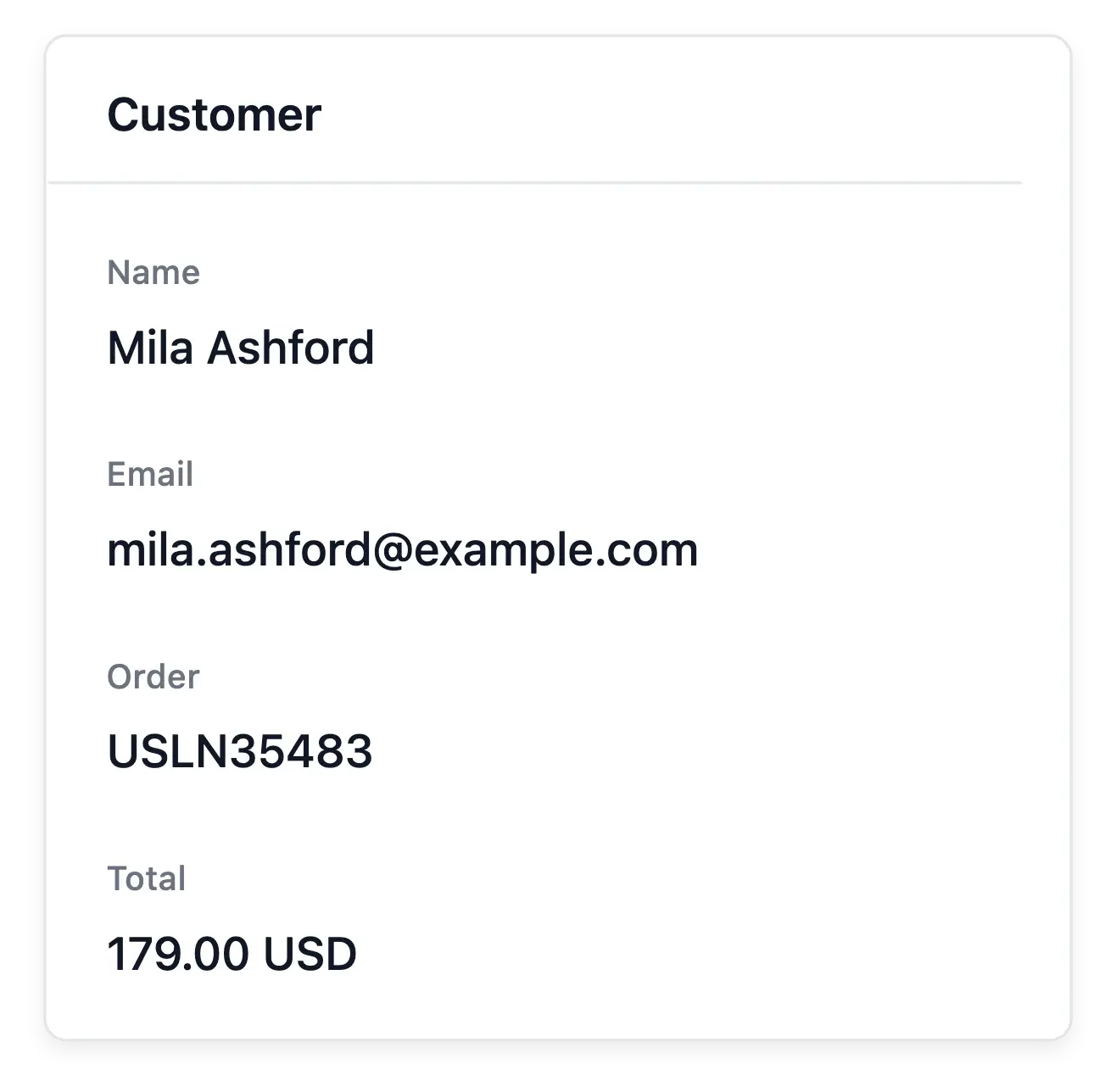
Keep a customer record linked to the buyer’s account.
- Order history
Let customers find their purchases and the information attached to them.
- After-sales requests
Connect help and return requests to the relevant purchase.
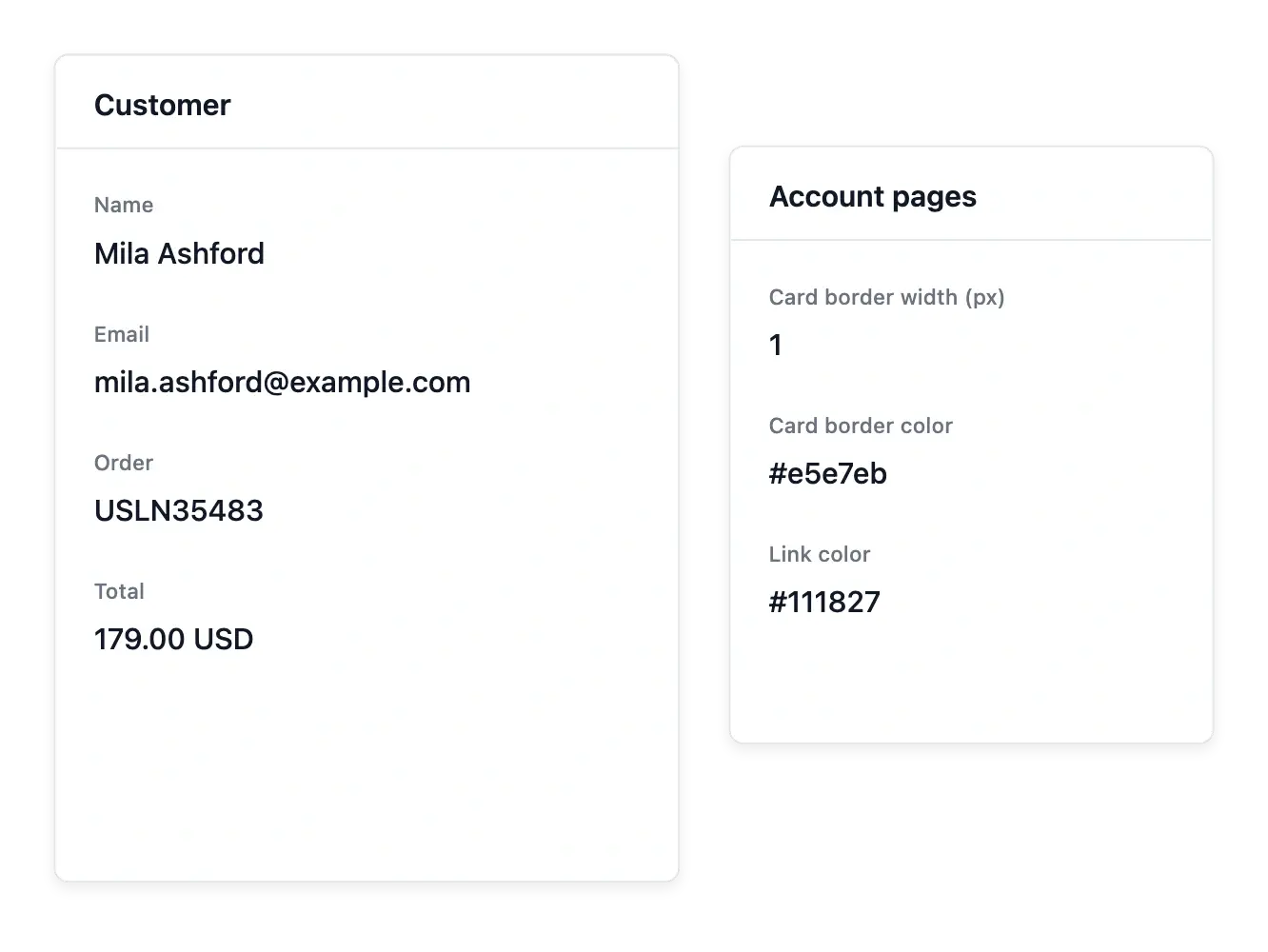
Keep customer access connected to their orders
The customer account provides a buyer-facing way to find recorded purchases and associated information. The shop's customer record keeps the operational identity your team uses, connected to that purchase context.
When the buyer needs help, requests can refer to the relevant order and item. This makes the account useful after checkout, rather than leaving the customer to describe a purchase from memory.
Give buyers access to their purchase context
Recorded purchases. The buyer-facing account gives the customer access to their own recorded purchases and associated information, separate from public product content.
Requests tied to an item. Customers can refer to the relevant purchase when requesting help. The merchant receives context rather than an unidentified question.
An account with shop styling. Use supported account appearance settings to keep the buyer’s area recognizable. The merchant’s customer record remains an operational tool.
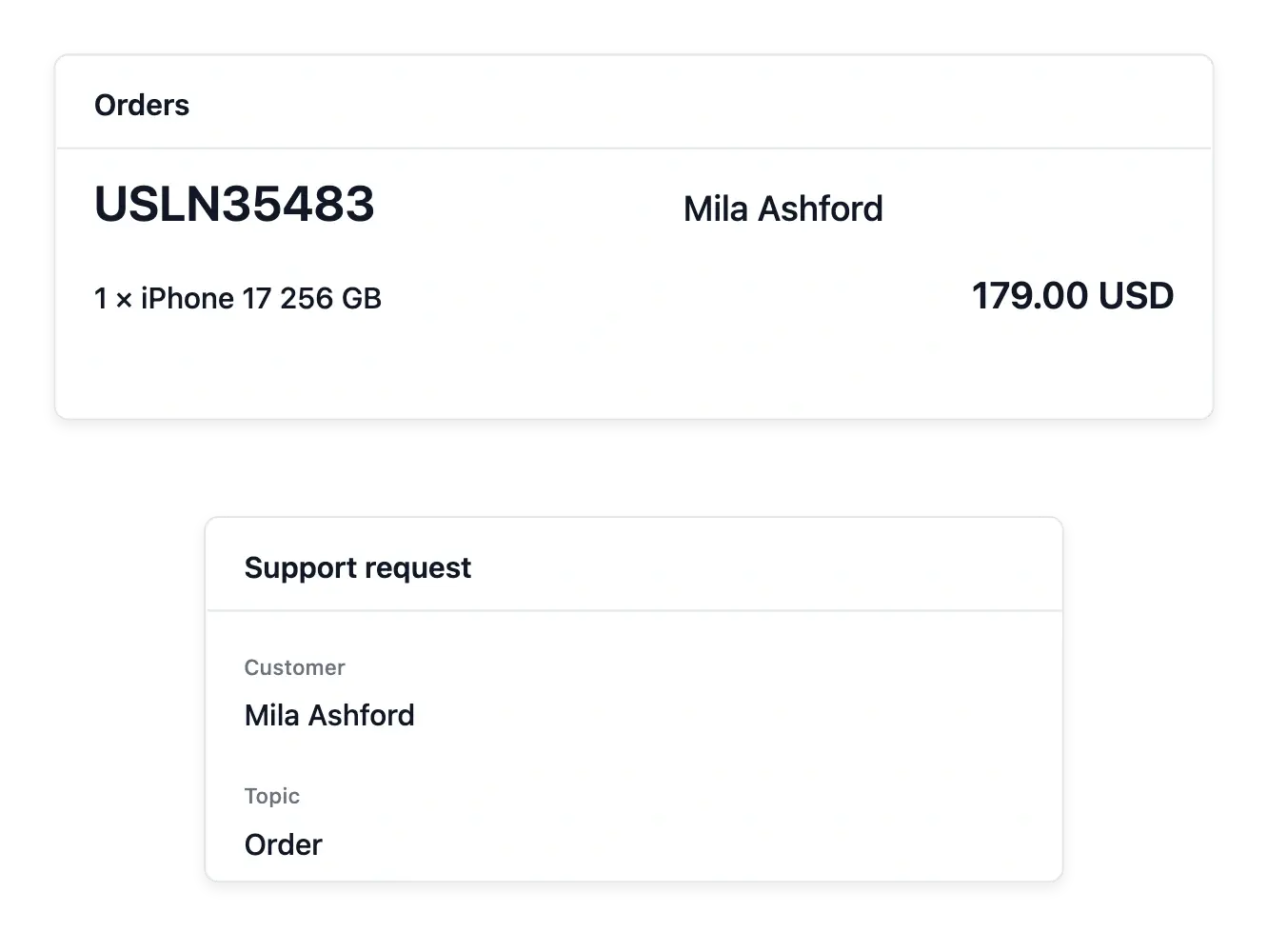
Connect self-service with your after-sales team
Your team handles requests in Support and follows returns in their own workspace. The account supplies the customer's entry point; the merchant tools provide the full operational record and available actions.
Keep public product descriptions distinct from a person's purchase history. Customer accounts concern the buyer's own relationship with the shop, while catalogue and marketing pages explain the range to visitors.
Connect customer self-service to merchant handling
Review the account presentation. Check the supported appearance alongside the shop theme. Keep the customer area consistent with the rest of the buying journey.
Start from the purchase. Let the buyer identify the order or item when asking for help. Keep the exchange tied to their own relationship with the shop.
Continue in the merchant tools. Handle the conversation in Support and the return in its dedicated workflow. The account is the entry point to those records.
Build a clearer relationship beyond the first sale
Give buyers an order context they can return to when they need help.
Questions about Customer accounts
No. It is the shop customer's account, while the merchant manages the business in the application.
Yes. Their account connects them to their recorded orders and associated information.
Yes. Supported customer requests carry the relevant purchase context.
In the shop's Support workspace.
No. The catalogue describes products; the account concerns a customer's own purchases.
Returns have their own records and process, linked to the relevant purchase.